
Every so often a piece of everyday technology disappears so smoothly that we forget it was ever there. The floppy disk went that way, then the headphone jack, and now the humble SIM card is following the same path — not with a bang, but with a firmware update. In 2026 the shift from removable plastic SIMs to embedded, software-defined eSIMs has crossed from early-adopter novelty into simple default, and nowhere is the change more visible than in how people stay connected when they travel abroad.
From plastic tray to downloadable profile
For three decades, connecting a phone to a network meant physically inserting a card. The eSIM ends that ritual. It is a reprogrammable chip built into the phone that downloads a carrier ‘profile’ over the air, carrying the same credentials and data allowance a plastic SIM would, but as software. The practical effect for travelers is dramatic: instead of queuing at an airport kiosk or ordering a card in advance, you buy a plan online and it installs in under a minute. A wave of dedicated eSIM providers has built entire businesses on that simplicity, selling data by destination the way you might buy a plug adapter for the country you are visiting.
Why the timing finally clicked
The technology is not new, so why has 2026 become the tipping point? Three forces converged. First, hardware: Apple removed the SIM tray entirely from US iPhones, and the rest of the industry followed the signal, making eSIM support universal on new flagships. Second, awareness: enough travelers were burned by roaming bills that a cheaper, install-before-you-fly alternative found a ready audience. Third, friction finally disappeared — activation went from a confusing settings menu to a single scanned QR code that even non-technical users manage without help.
The result is a market that has quietly reorganized itself around the traveler’s actual need: affordable data, ready the moment the plane lands, with no physical object to lose. The old model — expensive carrier roaming as the default, a local SIM as the frugal alternative — has been squeezed from both ends by a third option that is cheaper than roaming and more convenient than a local card.
What it means in practice
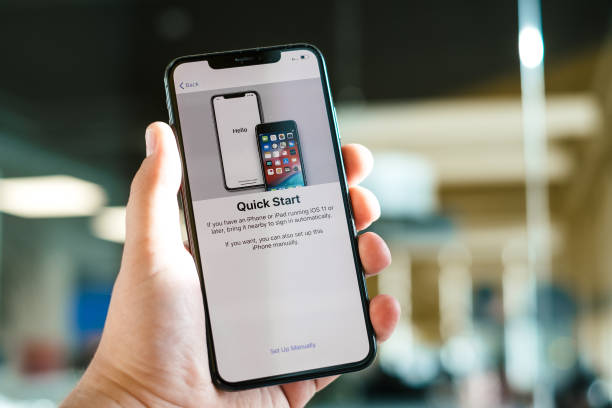
For the average international traveler, the change removes a whole category of low-grade stress. There is no arrivals-hall scramble, no passport-and-cash SIM purchase in a language you may not speak, and no shock bill weeks later. If your phone still runs on a plastic card at home, the transition is straightforward: a clear guide to activating an eSIM on iPhone step by step walks through the entire process, including how to keep your home number live for calls and codes while a travel profile carries your data.
· No physical card to buy, ship, insert, or lose — the profile is pure software.
· Activation on arrival, because the plan was installed before departure over home Wi-Fi.
· Fixed, visible pricing that ends the era of the surprise roaming statement.
· Dual-line capability, so your home number and travel data coexist on one device.
The ripple effects reach far beyond travel
It would be a mistake to file this as a story only about holidays and airports. The same software-provisioning shift is quietly reshaping how phones work at home, too. Switching carriers no longer means waiting for a card in the mail or setting aside a nervous weekend to port a number; a new line can be activated from an app in minutes. Households are provisioning cellular smartwatches and tablets without ever visiting a store. Workers are carrying a personal line and a company line on a single handset, ending the old two-phones-in-one-pocket compromise. Each of these is a direct consequence of turning the SIM from an object you install into a profile you download.
For the wider telecom industry, the implications are just as large. Instant digital onboarding lowers the barrier for smaller and virtual operators to compete, because they no longer need to manufacture, warehouse, and distribute physical cards to win a customer. That pressure tends to push prices down and flexibility up, which is good news for anyone who has ever felt locked into a plan by the sheer hassle of changing it. The traveler-facing eSIM services are simply the most visible front of a much broader move toward treating connectivity as software you manage rather than hardware you own.
It is worth watching where this goes next. Wearables, cameras, cars, and the sprawling world of connected devices all benefit from being able to provision a data plan remotely, on demand, without a human ever touching a tray. The plastic SIM was a bottleneck in all of these categories, and removing it opens design and product possibilities that were previously impractical. The disappearing SIM card, in other words, is not the end of a story but the quiet beginning of several — and travel just happens to be the one where ordinary people notice the change first.
Even the language we use is beginning to lag behind the reality. We still say we are ‘getting a SIM’ for a trip, still picture a small card and a tray, still frame the task as acquiring a physical object. But the thing itself has already dissolved into software, and within a few years the phrase will sound as quaint as ‘dialing’ a number does today. That gap between how we talk about a technology and how it actually works is usually the surest sign that a transition has genuinely completed — the habit of speech is the last part to catch up. For now, the practical takeaway is simpler than the sweep of the change suggests: the next time you plan a trip abroad, you no longer have to think about SIM cards at all. You buy data the way you buy any other digital service, it arrives as a download, and it works. The revolution, as usual, announces itself not with fanfare but with the quiet disappearance of a problem you had simply stopped noticing you had.
A change that is already irreversible
Technological transitions feel optional right up until the moment they are complete, and then the old way simply stops being available. The SIM tray is not coming back; new phones are being designed without room for it, and the entire connectivity industry is reorganizing around software provisioning. For readers who travel even occasionally, the takeaway is not that they must rush to keep up — it is that the friction they have long accepted as an unavoidable part of going abroad has quietly been engineered away. The next time you fly, the smartest piece of travel tech you carry may be the one you can no longer see, because it lives inside a chip and arrived as a download. That is how the biggest shifts usually happen: not loudly, but so smoothly that one day you realize the old problem is simply gone.