
Every construction project has a labor budget set at bid time. That budget is based on an estimate — experience, historical data, and professional judgment about how long each scope item will take. What actually happens on the job site is something different. Conditions change, crew productivity varies, weather causes delays, and scope items turn out to be more complex than anticipated. The firms that manage this gap proactively — catching overruns while they’re still small — are the ones that finish projects profitably.
That proactive management requires accurate, real-time labor data. Construction project time tracking software gives project managers that data — hours by cost code, by crew, by phase — updated daily rather than compiled at month-end when it’s too late to adjust.
Daily vs. Weekly Time Logging: Why It Matters
The difference between daily and weekly time logging in construction is significant. A foreman who logs hours daily can account for exactly what happened on each shift — which crews worked which scopes, how overtime was distributed, what caused any delays. A foreman reconstructing a week’s worth of activity on Friday afternoon produces estimates, not records. For projects where labor represents 30 to 40 percent of total cost, that distinction is worth real money.
Integrating Field and Office Time
On most construction projects, there are two categories of labor: field crews doing the physical work and office staff managing coordination, procurement, submittals, and client communication. Both categories consume hours from the project budget. Field time gets tracked through foreman reports; office time often doesn’t get tracked at all.
For architecture and engineering firms that also manage construction phases, time tracking for architects that connects to the same project database as field labor creates a complete labor cost picture — every hour, from every category, in one report.
Subcontractor Time and Compliance
General contractors managing multiple subcontractors need to verify hours beyond just tracking their own crews. Certified payroll requirements on prevailing wage jobs, lien waiver documentation, and subcontractor invoice verification all depend on having accurate time records. Software that captures and organizes this data by subcontractor and trade reduces the administrative burden of compliance significantly.
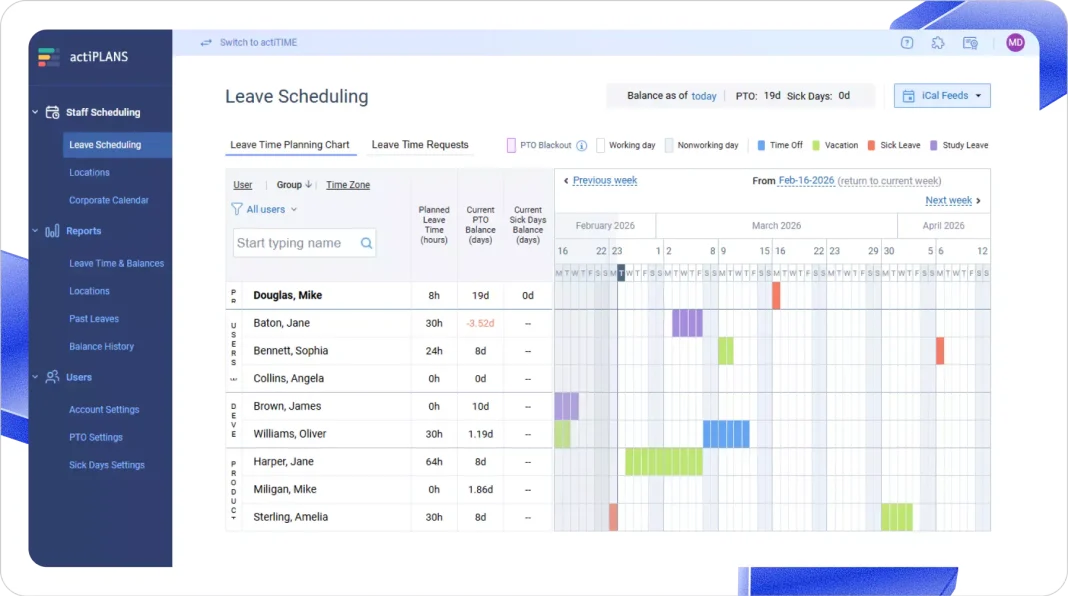
For staff management beyond time tracking — planned leave, availability by day, holiday schedules — actiPLANS handles the absence management layer so project managers always know which of their key people are on-site and which are not.
Choosing the Right Tool for Your Firm’s Size
Small contractors with two or three active projects need something simple: mobile time entry, cost code structure, and a weekly report. Large general contractors managing dozens of concurrent projects across multiple sites need multi-project dashboards, role-based access, payroll integration, and robust audit trails. Choose a tool scaled to your current operation with room to grow, and prioritize field usability above all else — the best system is the one your foremen actually use.