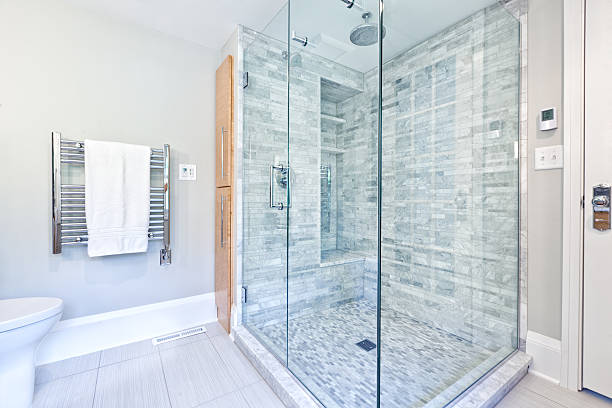

A puddle outside the shower can point to more than a worn strip of plastic. Small alignment problems may lead to loose hardware, damaged walls, and glass that no longer moves as it should. Certain warning signs call for a trained installer because the trouble involves the entire enclosure, not just the door.
1. Water Keeps Escaping Even After the Seal Is Replaced
Leaks near a closed door often start with the slope of the shower curb rather than the seal itself. Water should drain toward the shower floor, while sweeps and seals manage splashes instead of holding back standing water. Incorrectly positioned panels may leave gaps where the door meets a wall or fixed glass. Adding more caulk cannot correct those measuring errors, and sealing the wrong joint can trap moisture. During professional shower door installation, technicians check the curb, panel overlap, seal placement, and direction of water flow before deciding how the enclosure should fit.
2. The Door Scrapes the Floor or Won’t Close Properly
Dragging along a threshold usually means the door has shifted or was fitted with too little clearance. Hinges can loosen, but an opening that is out of square may also cause the glass to contact the curb as it swings. Repeated friction can damage seals, hardware, or the exposed edges of the panel.
Misalignment also affects magnetic catches and vertical seals that need to meet evenly. Experienced installers check whether the problem comes from hinge adjustment, wall movement, or incorrect panel dimensions. If the original shower door glass was cut for a poorly measured opening, replacement may be more reliable than forcing the door into position. Tempered glass cannot be trimmed or drilled again after manufacturing, which makes accurate measurements especially important.
3. Chips or Cracks Appear Near the Glass Edges
Damage around a corner, hinge hole, or handle opening deserves immediate attention. Although tempered safety glass handles everyday use well, a concentrated impact at an edge can weaken the entire panel. Unlike ordinary window glass, tempered glass can break into many small fragments once its internal stress is released. Those fragments can still cause injuries, especially on a wet floor. Cracked glass should not remain in service while someone looks for a cosmetic repair. Glass professionals assess the enclosure and arrange a properly measured replacement rather than attempting to patch damaged safety glass.
4. Sliding Panels Stick, Rattle, or Leave Their Guides
Stiff movement in sliding shower doors can come from worn rollers, bent tracks, buildup inside the rail, or missing bottom guides. Panels that tilt or jump their tracks present a different problem from one that simply needs cleaning. Rollers must support the panel’s weight, and the guides must limit sideways movement without gripping the glass too tightly. Installing a heavier panel onto an old, underrated track can create the same problem again.
For sliding glass door replacement in a shower enclosure, the installer needs to evaluate the complete track system, not just the damaged panel. Clearances, roller spacing, overlap between doors, and the height of the opening determine whether a new assembly will work. Matching shower components keep the panels moving smoothly while helping contain splashes.
5. Crooked Walls Make a Standard Door Impossible to Fit
Tile can look perfectly straight while the walls behind it lean enough to create an uneven opening. Differences between measurements at the top, middle, and bottom may leave a stock shower door with visible gaps or hardware that will not sit flat. Shower floors and curbs also need careful measurements because slight slopes affect the clearance under swinging panels. Custom glass fabrication allows an installer to account for these conditions before tempering. Once the panel is finished, its shape cannot be changed on site, so an accurate template matters more than trying to make a standard door fit.
6. Hinges or Wall Mounts Start Pulling Away
Movement around a wall bracket can indicate loose fasteners, damaged tile, or inadequate backing behind the finish. Frameless glass panels place substantial weight on a small number of mounting points. Wall anchors that grip only thin tile or weak wallboard may not support the door safely, even if the hardware initially feels tight. Squeaking, shifting gaps, and screws that repeatedly loosen all deserve closer inspection.
Weight matters when planning shower door replacement because thicker glass may call for different hinges or stronger structural support. Installers check the panel size, hardware ratings, and available wall framing before choosing mounting locations. Concealed water damage can complicate the work if moisture has softened the material behind the tile. Proper installation addresses the support problem rather than simply installing larger screws into an unstable surface.
7. The Old Enclosure No Longer Accepts Safe Repairs
Age alone does not mean a shower enclosure needs replacing, but corroded tracks, missing parts, broken framing, and repeated leaks can make piecemeal repairs impractical. Older assemblies may use hardware that no longer has a compatible replacement, while damaged mounting surfaces may require attention before new glass goes in. Full replacement also offers the chance to change from a framed door to a suitable frameless or semi-frameless layout. Huntsville Glass provides custom shower enclosures, including sliding and swinging configurations, for homeowners in Huntsville and nearby communities. Its team can help assess opening dimensions, glass options, and compatible hardware when an aging enclosure needs a properly fitted replacement.