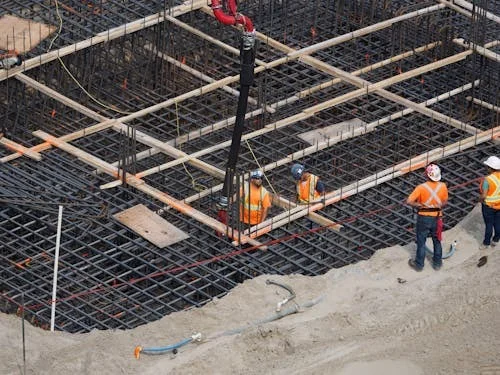

Why Choosing the Right Steel is the Very Cornerstone of Your Safety
In today’s India, the strength and stability of your structure depend largely on what lies inside its concrete layers. For all homeowners, contractors, and engineers, choosing the right iron rod for building construction is undoubtedly the most essential task during the whole building process. It is not only a financial consideration but rather a responsibility to ensure that the structure, regardless of being a tall tower or residential house, stands the test of time, environmental wear and tear, and earthquakes.
We at Bloom Agency have analyzed the current trends in the Indian construction industry as of 2026. We noticed that the increasing use of high-end RCC has turned the choice of steel into a science. Depending on whether your construction project takes place in humid areas, like in Mumbai, or in earthquake zones, like in the North of India, the quality of the steel will determine how long your investment will be protected against all possible factors. Read our guide to learn everything about the right choice of iron rods for your building construction.
Takeaways: How to Choose the Best Iron Rods for Building Structures
Here are the key featured-snippet points to help you choose the most suitable steel bars for your project quickly:
Standard TMT Bars: The only kind of recommended iron rods in modern RCC structures because they have good bonding and tensile properties.
Correct Grade: Fe-500D for houses and Fe-550D for high-rises.
Steel Diameter: Normal diameter for rods varies between 8mm (for slabs) and 25mm (for foundation and large columns).
Certified Steel Bars: Always make sure your chosen steel rods meet IS 1786 requirements and have an official stamp with grade designation.
Digital Procurement: Buying steel bars online in 2026 will be convenient and cost-effective.
Kinds of Iron Rods Employed in Current Building Projects
Even though “iron rods” are referred to colloquially, the industry has undergone several changes from its early days in metallurgy. Getting familiar with different types will help you understand the reasons why some are no longer relevant.
- TMT Bars (Thermo Mechanically Treated)
They lead in the industry. Due to a special heat treatment procedure, these bars develop a hard exterior martensite layer while retaining their ductile interior. They make the best iron rods for construction since they provide high yield strength and immense flexibility.
- Tor Steel (Cold Twisted Deformed Bars)
The choice during the latter part of the last century was Tor steel. It entailed twisting the bars following cooling to enhance their strength. Unfortunately, this process resulted in microscopic cracks within the bars, making them vulnerable to corrosion. Most structural engineers suggest not employing Tor steel by 2026.
- MS Round Bars (Mild Steel)
These are ribless bars with smooth surfaces. Even though they have been commonly used in the past, their inability to form a bond with the concrete results in their inefficiency as reinforcement. They are currently used only for grills and fence structures instead of being the preferred rod for construction purposes.
- Structural Sections (Angles, Flats & Channels)
They are suitable for steel framework structures, shed roofs, and trusses. While they offer superior load-bearing ability depending on the design requirements, their purpose differs from that of the reinforcement bars in RCC.
Why Are TMT Bars the Professional Choice?
The key point behind why all civil engineers prefer TMT bars as the iron rods for buildings comes down to their method of manufacture. In the process of “Quenching and Self-Tempering,” the following properties are ensured due to their distinctive structure:
High Tensile Strength: These rods can withstand huge loads without being deformed.
Earthquake-Resistant: Due to the high ductility properties of TMT rods, they do not break when there is any earthquake vibration.
Corrosion Resistance: The modern treatment of TMT bars guarantees rust-proofing, which is extremely important for the durability of the concrete.
Improved Concrete Gripping: Thanks to the ribs of the TMT iron rod for building construction, it does not slide out of the concrete.
Leading TMT Iron Rod Brand Names in the Indian Construction Industry of 2026
Iron rods from different brands vary in quality depending on their manufacturing process. The following are some of the best iron rods for building construction in India:
VIZAG STEEL (RINL): With highly purified iron and sophisticated manufacturing techniques, Vizag Steel is used mainly in massive infrastructure development and government projects.
TATA TISCON: A trailblazer in the private sector, Tata Tiscon is renowned for its SD or Super Ductile bars that provide the greatest protection in quake-prone regions.
JSW NEOSTEEL: Featuring high purity, JSW Neosteel produces clean iron rods because of its high control of phosphorus and sulphur.
SAIL TMT: Operating as a leading public-sector enterprise, SAIL supplies strong steel that follows the highest safety standards in the industry.
JSPL PANTHER: Renowned for its super-strong Fe-550D variants and innovative long-length bars.
KAMDHENU: Highly popular among the residents of India, Kamdhenu is used mainly in residential buildings owing to its reliability and affordable pricing.
KAMACHI TMT: Rapidly gaining popularity due to its corrosion-resistant and earthquake-resistant variants.
Types of Iron Rod Sizes and Their Usefulness for Structural Purposes
Weight distribution is an intricate art form. Incorrectly choosing the size of the iron rod for construction purposes may result in fractures or, even worse, the collapse of the structure being built.
8mm – 10mm: The smaller rods are mainly utilized in slabs and for reinforcing purposes in the formation of “rings” around larger iron bars.
12mm – 16mm: The medium-sized iron rods are mainly used in residential structures for beam and column construction.
20mm – 25mm: This type of thick iron rod is mainly used in multi-level building constructions as the main pillars of support from the foundation up.
Correct selection of an iron rod for building construction ensures proper distribution of the load to the ground.
Guide to Purchase Steel Online
In 2026, numerous constructors are shifting from informal local yards to reliable online purchasing channels. In case you need to order an iron rod for building construction online, here are some of the things you must do:
Check Supplier Authenticity: You can only purchase from certified suppliers and online stores that issue mill certificates.
IS 1786 Marking: The steel material needs to be stamped with the BIS mark.
Visual Examination upon Delivery: Look for a “Rust-Free” surface appearance. Although it is normal to have an orangeish color, excessive pitting or flaking indicates old and degraded stock.
Confirm the Weight Per Bundle: Check the weight per bundle. As an illustration, the 12mm TMT bar weighs around 0.888 kg per meter.
Brand Labeling: All authentic iron rods for building constructions are labeled with the brand (such as TATA, JSW) and grade (such as 500D).
The Advantages of Purchasing Your Iron Rod for Building Construction Online
The digital transformation in the construction industry has made several things easier. The advantages of purchasing your iron rod for building construction from online platforms are:
Transparency: Get live pricing with the help of the market without having to pay any commission to the middleman.
Bulk Savings: Online platforms generally combine bulk demand in order to provide bulk savings to consumers.
Safe Delivery: Professional logistics will take care of the safe and sound delivery of the metal without bending.
Multi-Brand Comparison: It will help you in getting different brands like Tata, JSW, and Vizag, etc., in one go, and purchase the right iron rod for building construction.
Importance of Quality TMT Rebars for Construction Projects
Quality steel is preferred by civil engineers and builders since it maintains their reputation and ensures the safety of the client. High-quality steel bars ensure that:
Concrete Spalling Does Not Occur: Rusting steel expands, leading to cracks in the concrete that eventually spall off. Quality TMT bars are not subject to such problems.
Resilience Against Earthquakes: During earthquakes, low-quality steel behaves like fragile glass, breaking into pieces easily. However, ductile TMT bars are flexible enough to accommodate the force.
Timely Completion of Projects: Certified steel makes cutting and welding operations faster.
FAQ: All About Construction Steel
Which iron bar should be used for constructing a house?
TMT (Thermo-Mechanically Treated) bars are considered the best when constructing homes. For instance, Fe-500D grade bars from companies such as Tata Tiscon, JSW, and Vizag would serve you well.
Which type of steel is the best for a 2-storey building?
Fe-500D is definitely the right choice. It has a great tensile strength and will keep your house safe from vibrations and minor earthquakes.
What iron rod size will be required for constructing building columns?
Typically, 16mm and 20mm rods are good enough for columns, and 12mm-16mm rods for beams in a conventional residential building.
Is there any other alternative for using MS rods in roof slab construction?
No. According to current construction codes, TMT bars should always be preferred over MS rods since they adhere to concrete better.
Is it secure to purchase iron rods for constructing buildings online?
Yes, purchasing online will be more secure in 2026 because you get fresh factory stock with certificates and invoices compared to purchasing from local yards.
Which type of rod would be appropriate to use while building near the sea?
You should use CRS or Epoxy-Coated TMT bars while constructing a building near the sea because these are specialized types of iron rods that protect your steel from being eroded by sea air.
Conclusion: Creating a Legacy with the Right Steel
In conclusion, the durability of your home is an intangible asset that exists only within the iron rod for building construction that you select. Choosing low-end, unbranded steel might offer immediate financial gains; however, considering the risks of cracks and even earthquakes due to weak iron, one might wonder whether the trade-off is really worthwhile.
Here at Bloom Agency, we advocate for a Quality First approach, which involves using high-quality TMT bars such as the Fe-500D series, ensuring that your sizes are correct, and purchasing from reliable, certified sources. You will not simply be building another house, but rather a legacy. From Tata to JSW, and all the way to Vizag, your choice of iron rod for building construction should reflect nothing less than excellence.