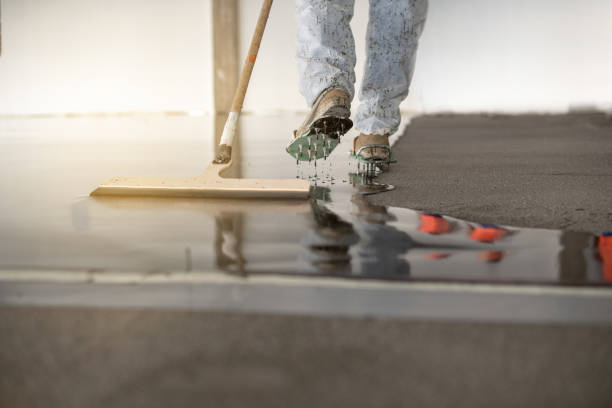

Strong adhesion starts with the way liquid resin connects to prepared concrete. Mechanical bonding occurs when epoxy flows into tiny pores, grooves, and surface irregularities before curing into a hard layer. This physical grip helps epoxy flooring resist peeling, shifting, and separation under daily use.
How Does Mechanical Bonding Hold Epoxy to Concrete?
Concrete contains small openings that become more accessible after proper surface preparation. Fresh epoxy enters those spaces while still liquid, then hardens around the rough texture of the slab. The cured coating stays anchored because it has formed thousands of microscopic contact points instead of resting on a smooth surface.
Unlike glue that relies mainly on surface tack, this bond depends on physical interlocking. Greater contact with solid concrete usually creates better adhesion, provided the slab remains dry, clean, and structurally sound. Professional epoxy floor companies therefore spend significant time preparing the base before opening any resin containers.
Why Smooth Concrete Creates a Weak Connection
Power-troweled slabs often have a dense, polished finish that limits how deeply epoxy can penetrate. Sealers, curing compounds, and weak cement paste can make the surface even less receptive. Applying an epoxy garage floor directly over those materials may produce a finish that looks good at first but lifts under tires or impact.
Grinding removes the sealed upper layer and exposes stronger concrete beneath it. Proper preparation also creates a controlled texture known as a concrete surface profile. That profile gives the coating enough depth to lock into the slab without leaving scratches that show through the finished floor.
Mechanical Preparation Opens the Concrete Surface
Diamond grinding and shot blasting are common methods used to create a bondable profile. Grinders use rotating diamond segments to cut away contamination and weak material, while shot blasters propel small steel particles against the slab to produce an even texture.
Both processes can prepare concrete effectively when matched to the coating system. Important results include:
- Removal of loose cement paste and old residue
- Exposure of clean, stable concrete
- Creation of microscopic peaks and valleys
- Improved primer penetration
- More consistent adhesion across the floor
Crews must still treat edges, corners, drains, and areas around fixed equipment. Large machines cannot reach every location, so hand grinders help prevent weak perimeter sections.
A Clean Profile Matters as Much as a Rough One
Dust left after grinding can block direct contact between the resin and concrete. Instead of bonding to the slab, the coating attaches to loose particles that may later pull away. Industrial vacuum systems with suitable filtration remove fine debris from open pores before epoxy floors are installed.
Oil presents a different challenge because it may soak below the visible surface. Degreasing alone might not remove deep contamination, especially in older garages or repair shops. Contractors may need repeated cleaning, aggressive grinding, or removal of damaged concrete before applying commercial epoxy flooring.
What Can Interfere With Mechanical Adhesion?
Several conditions can weaken the bond even after the floor has been textured:
- Moisture vapor moving upward through the slab
- Silicone, wax, grease, or tire-care products
- Old sealers or curing compounds
- Soft patches and weak concrete
- Dust trapped inside cracks or pores
- Incorrect primer coverage
- Delayed application after preparation
Moisture deserves particular attention because vapor pressure can push against the underside of a coating. Testing allows installers to determine whether the slab falls within the product manufacturer’s limits or needs a moisture-control system.
Primers Strengthen Contact With Prepared Concrete
Primer reaches into the open surface and helps create a uniform base for the thicker body coat. Certain formulas also reduce outgassing, which occurs when air escapes from concrete and forms bubbles in wet resin. Correct coverage keeps the primer from becoming too thin to penetrate or too heavy to cure evenly.
Product selection depends on slab porosity, moisture readings, temperature, and the intended flooring system. Searches for epoxy flooring near me often return contractors offering similar colors, but preparation and primer choice usually matter more than decorative options.
Surface Profile Must Match the Coating Thickness
Thin coatings require a lighter, more uniform texture because deep grinding marks may remain visible. Thicker flake, quartz, or mortar systems can cover a more aggressive profile and may need it to support heavy traffic.
Matching the texture to the application prevents two opposite problems. A surface that is too smooth may not provide enough grip, while an excessively rough slab can absorb primer unevenly or require more material than planned. Experienced installers select tooling based on concrete hardness and the system’s required profile.
Why Mechanical Bonding Matters in Garages
Vehicle tires generate heat and twisting pressure as they turn on the floor. Road grit acts like sandpaper, while dropped tools can place concentrated force on small areas. A properly bonded epoxy garage floor distributes these stresses across a stable connection to the concrete.
Homeowners searching for an epoxy garage floor near me should ask how the contractor prepares the slab, controls dust, and verifies moisture. Photos of finished floors cannot show the quality of the bond underneath them.
Commercial Spaces Place Greater Stress on Adhesion
Warehouses, kitchens, workshops, and production facilities expose coatings to carts, forklifts, chemicals, vibration, and repeated cleaning. Weak adhesion may lead to chipped areas that grow as traffic catches the loose edges.
Facility managers comparing epoxy floors near me should request a written preparation plan. That document should identify the equipment, expected surface profile, repair method, primer, and number of coating layers.
Proper Bonding Begins Before the Epoxy Is Mixed
Inspection, testing, repairs, grinding, and cleaning establish the foundation for long-term performance. Added coating thickness cannot correct poor contact with the slab, and premium resin cannot remain attached to weak or contaminated concrete.
Elite Coastal Epoxy prepares residential, commercial, and industrial slabs before installing each coating system. Its team can evaluate surface condition, create the correct profile, address cracks and moisture concerns, and install epoxy flooring built around a dependable mechanical bond.